

With just over a month until the 2026 World Cup kicks off, a key venue is undergoing a dramatic transformation. The 72,220-seat stadium in Houston, Texas, has almost become unrecognizable as crews race to meet FIFA standards. The focus is on laying natural grass and carrying out a range of modern upgrades.
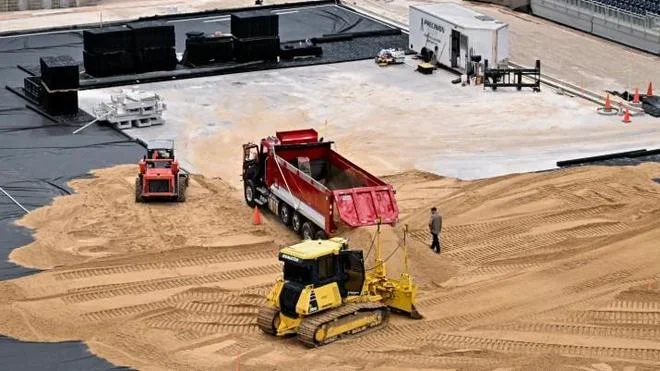
NRG Stadium in Houston has entered the final sprint for World Cup preparations. On-site footage shows bulldozers and heavy equipment already working to level the field, as organizers push hard to complete all renovations before the tournament begins.
According to the Houston World Cup Organizing Committee, the installation of FIFA-compliant natural turf officially began last week. The first layer of sod is expected to be placed around May 25. Meanwhile, local committee members and FIFA officials have moved into the stadium, accelerating the overall preparation process.
John Coupens, vice president of operations for the Houston World Cup Committee, stressed that the grass is the most critical element of the entire project. “I know everyone is talking about hospitality, ticketing, lighting, and training bases,” he said. “But without this field and a top-tier playing surface, there would be no World Cup in Houston.”
FIFA regulations require all matches to be played on natural grass. To meet this, the organizers will soon transport 81,000 square feet of natural sod. The turf is a mix of Kentucky bluegrass and perennial ryegrass, grown in Colorado before being shipped to Houston for installation.
Dan Bergstrom, the consultant overseeing the turf project, admitted the timeline is extremely tight. With Houston’s first World Cup match about five weeks away, he noted that a job like this typically takes 12 to 13 weeks under normal circumstances. “But we’re moving full speed ahead as planned,” he said.
Once the sod is in place, the stadium will use specialized plant growth lights shipped from Rotterdam to maintain turf quality throughout the tournament. Coupens acknowledged the high cost of the work but emphasized it’s an unavoidable investment. “It’s a very large expense, but without it, there would be no World Cup. You have to do these things to ensure the field meets world-class standards,” he said.
Beyond the turf, the stadium is undergoing structural changes. Some areas of the lower seating bowl have been redesigned, with certain seats removed to create more space for media operations during the World Cup. Per FIFA’s strict commercial and branding rules, the venue will be temporarily renamed “Houston Stadium” during the event, dropping its current commercial naming rights.
According to the schedule, Houston will host seven World Cup matches from June 14 to July 4, making it one of the most important host cities in the United States.
Finally, Coupens gave special thanks to turf project lead Dan Bergstrom, noting that Bergstrom has been involved since Houston launched its World Cup bid seven years ago. Looking at the still-construction site, Coupens reflected, “What I see now is not just a construction site, but the result of seven years of effort.”
